
Edelstenenbuurt is a 1970s social-housing neighborhood in Middelburg transformed from 76% hardscape to a climate-adaptive green neighborhood, 3°C cooler and flood-resilient, co-created with residents, Woongoed Middelburg, Vizita, and the Municipality of Middelburg.
Edelstenenbuurt is a 1970s social-housing neighborhood in Middelburg, home to 1,425 residents across 807 houses. It was 76% paved, heat-stressed, and flooding after every heavy rain. Working with Woongoed Middelburg, care provider Vizita, the Municipality of Middelburg, and the Interreg North West Europe Cool Neighbourhoods program, we redesigned the neighborhood with its residents: greener, 3°C cooler, and built around the people who live there.
The challenge
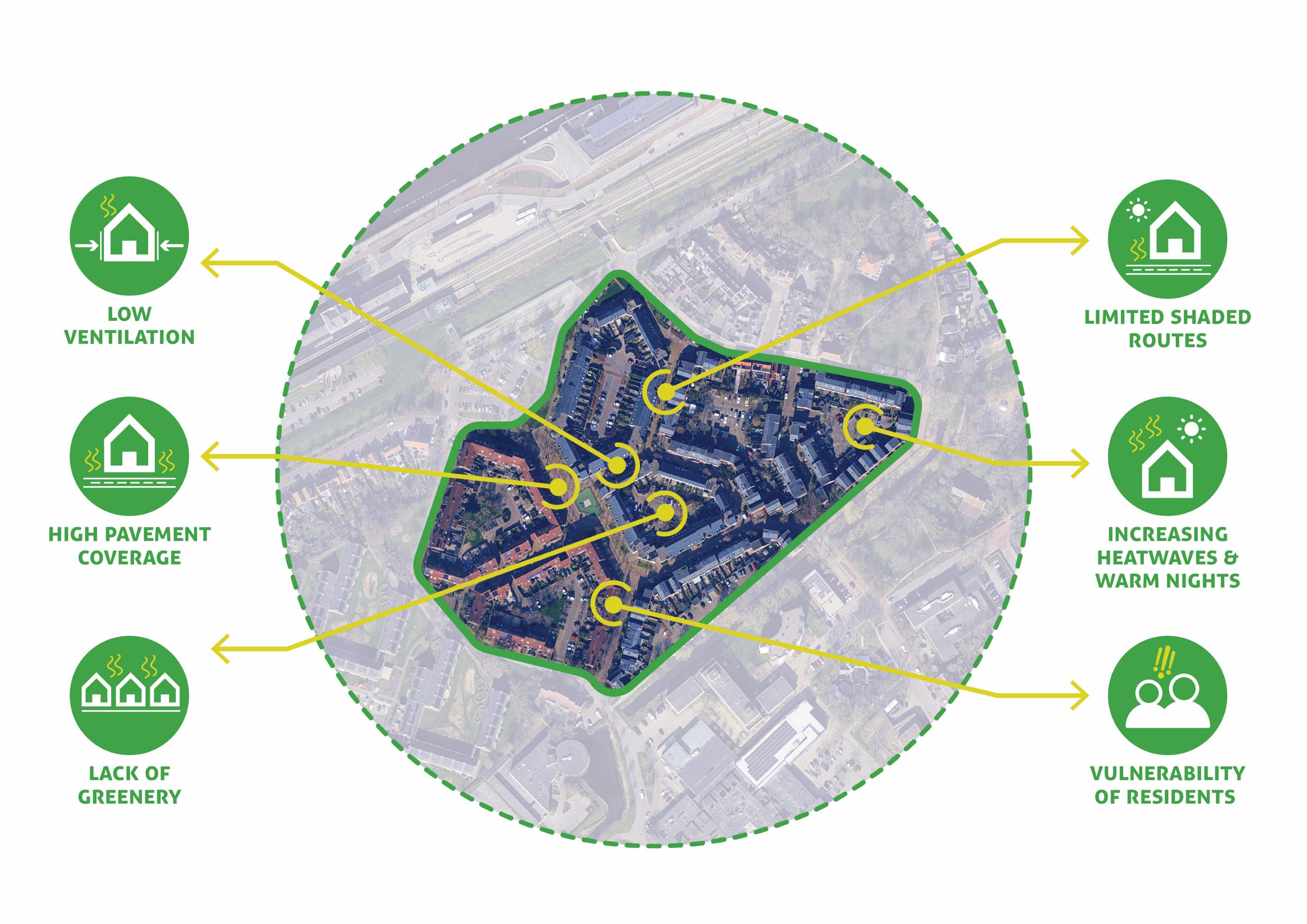
Edelstenenbuurt was built for cars and storage, not for people or weather. Of the 27,900 m² of public space between the houses, 76% was hardscape: asphalt, concrete tiles, parking bays. Trees were scarce, shade was rarer, and the few grass strips were ornamental rather than functional. On hot days, surface temperatures climbed high enough to make walking uncomfortable for the neighborhood’s older residents, many of whom live in Vizita’s care housing.
When it rained, the water had nowhere to go. Flash floods became routine, overwhelming the sewer system and pushing water into ground-floor entrances. Permeable surface made up only 1.8% of the neighborhood.
The social picture matched the physical one. Residents had no shared outdoor space to gather in, no safe places for children to play, and no reason to linger outside their front doors. Any redesign had to work around tight budgets, a dense underground tangle of gas, water, electricity, and telecoms, and the daily lives of 1,425 people who were not going anywhere during construction.
Our design approach
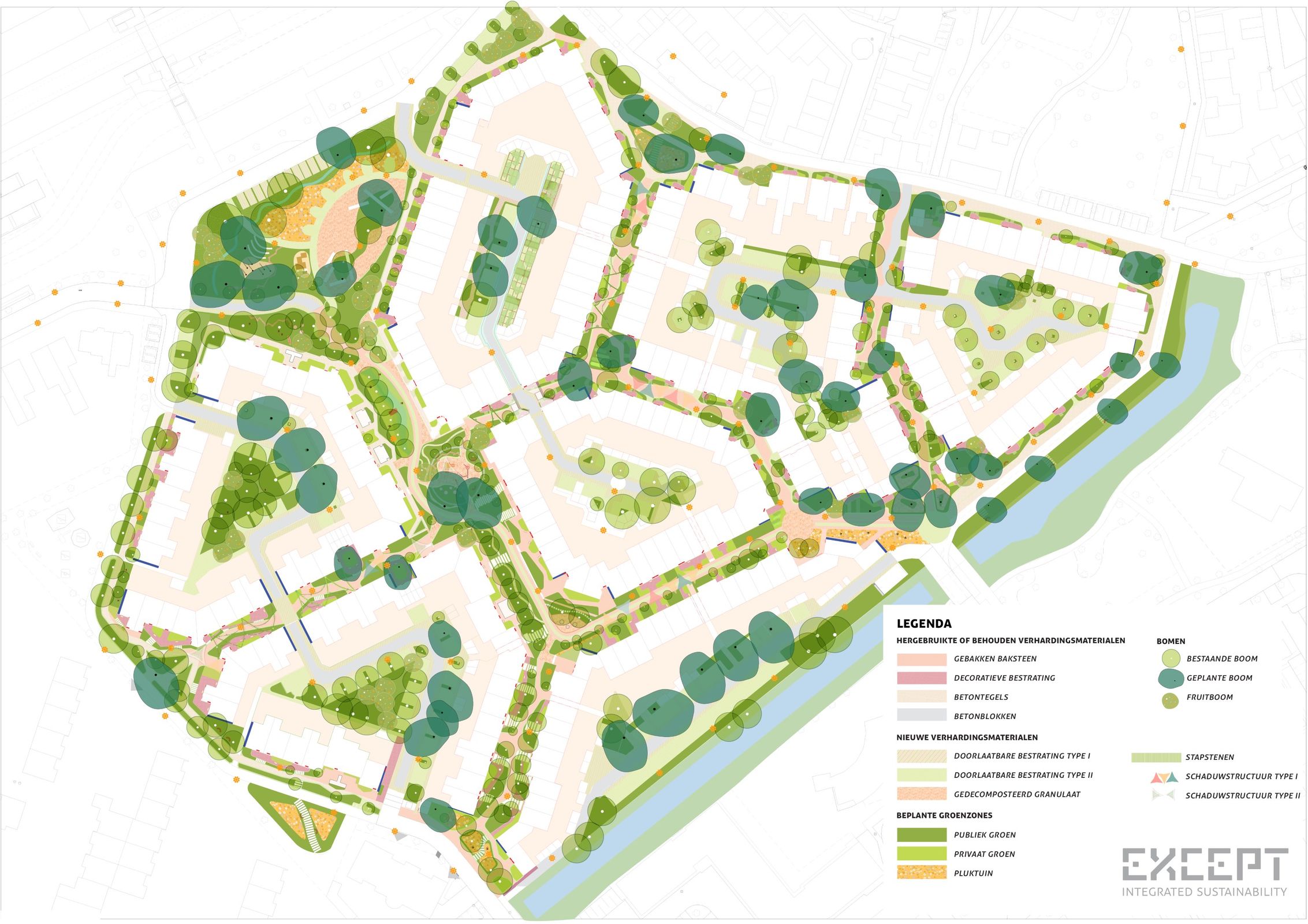
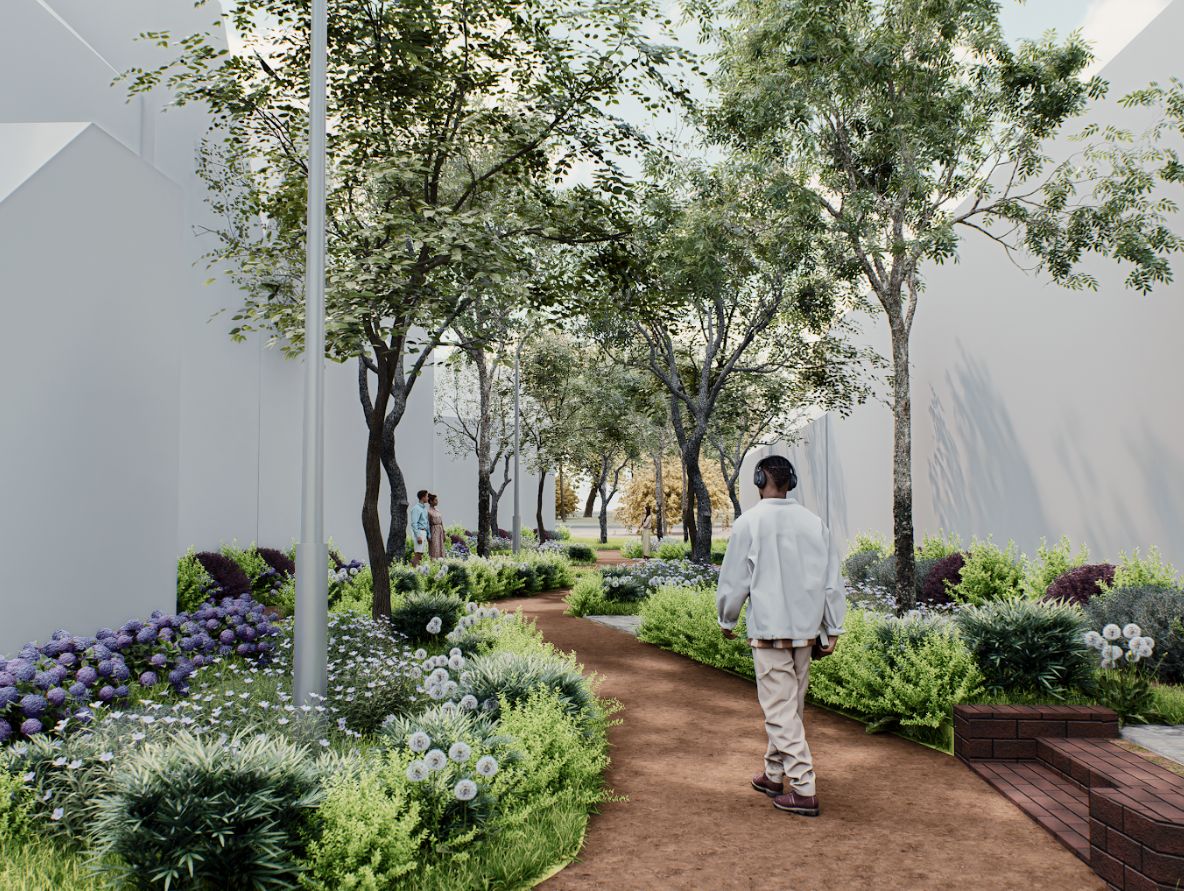
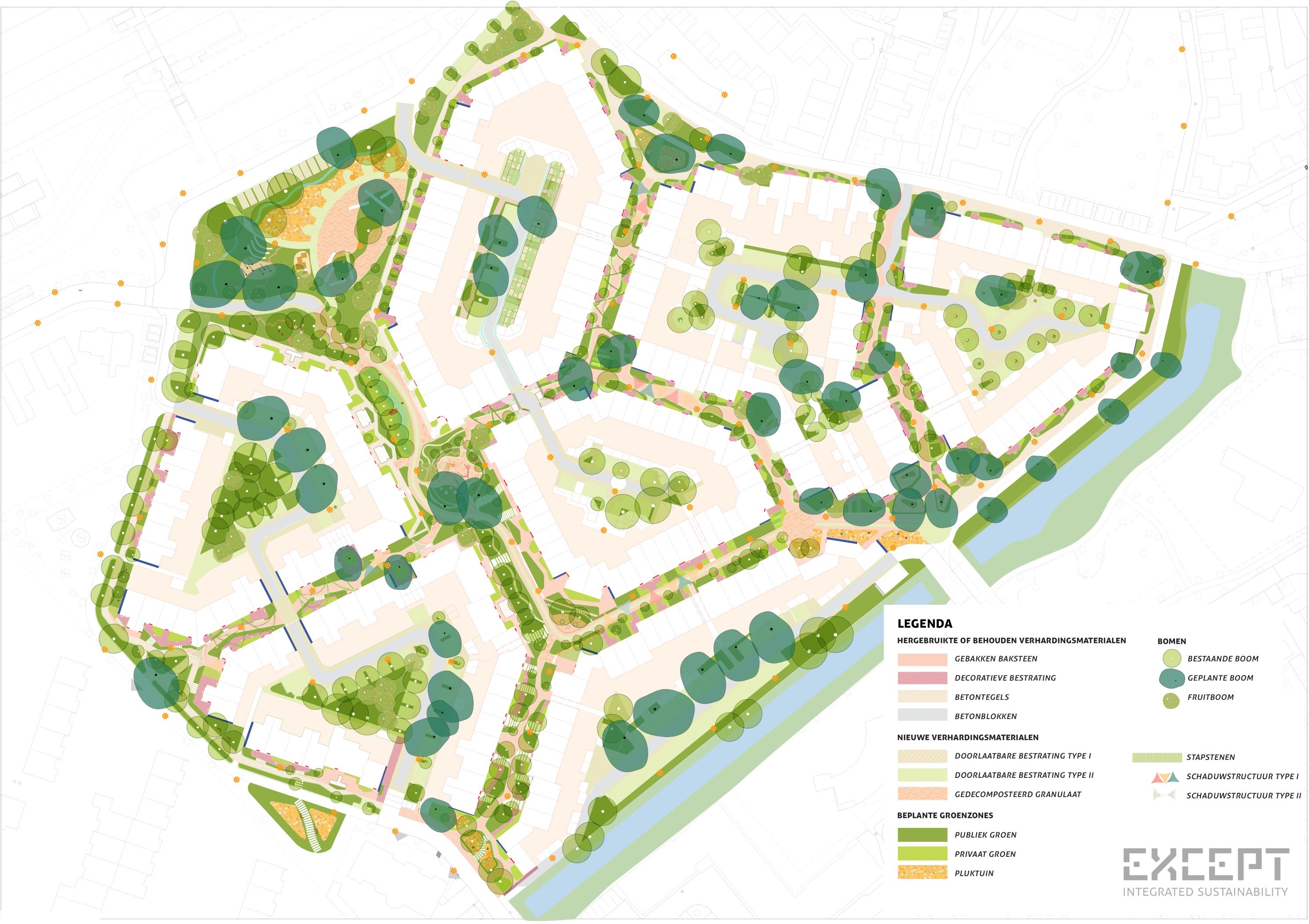
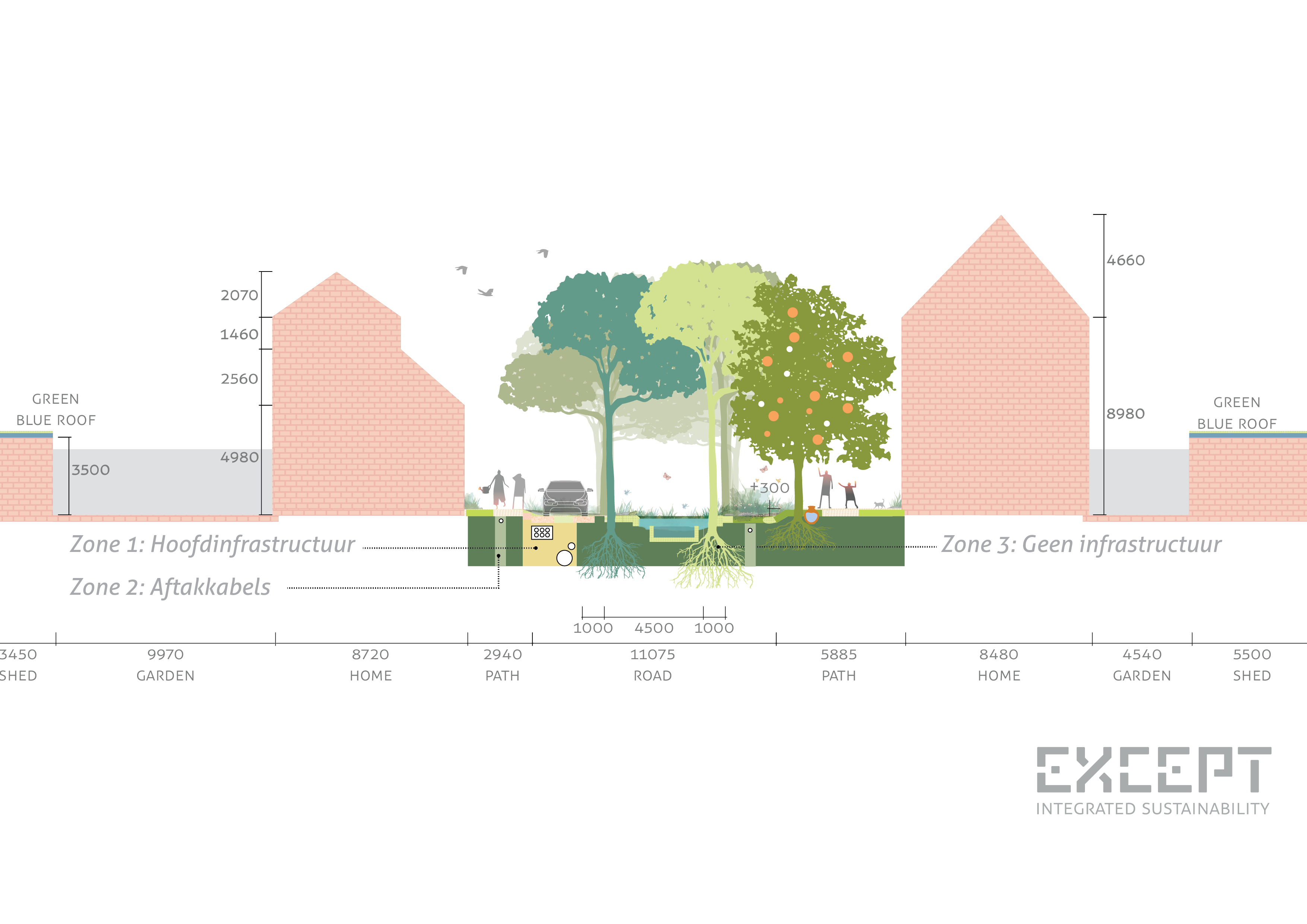
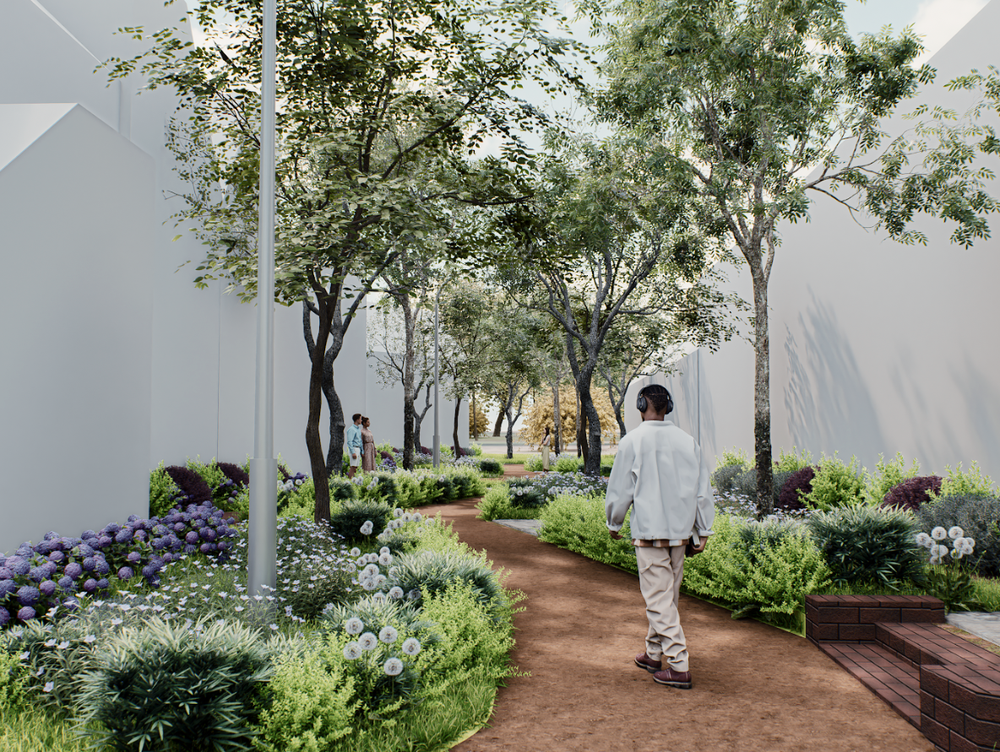
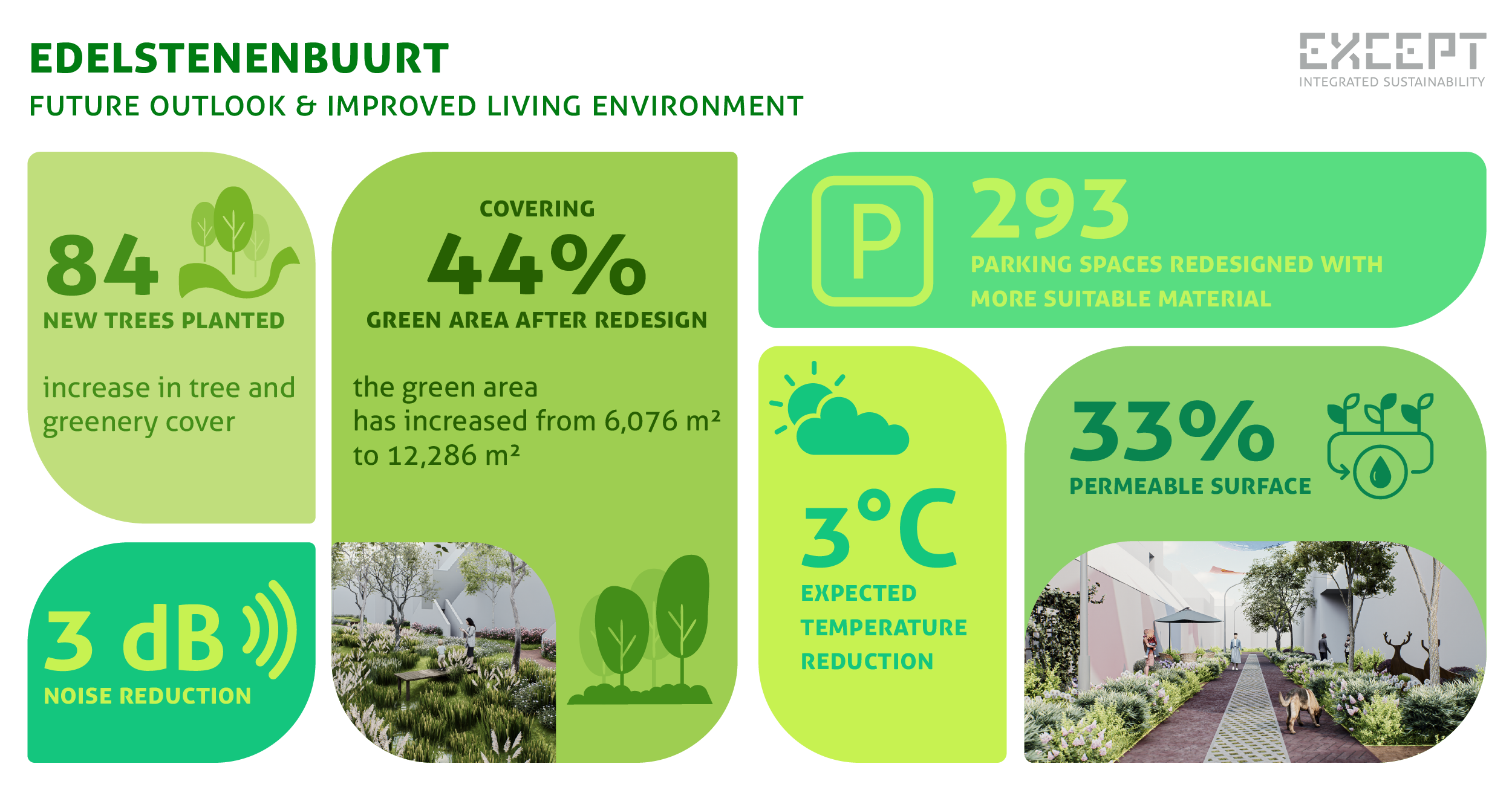
Shade first. We placed 84 new trees where residents walk, wait, and sit, and added pergolas over the most exposed gathering points. Paving in sunlit zones was switched to light-reflecting material to cut surface heat. Species selection was matched tree by tree to the underground infrastructure below: shallow-rooting varieties over utility corridors, deeper-rooting species where the ground was clear, so the canopy could grow without tearing up pipes later.
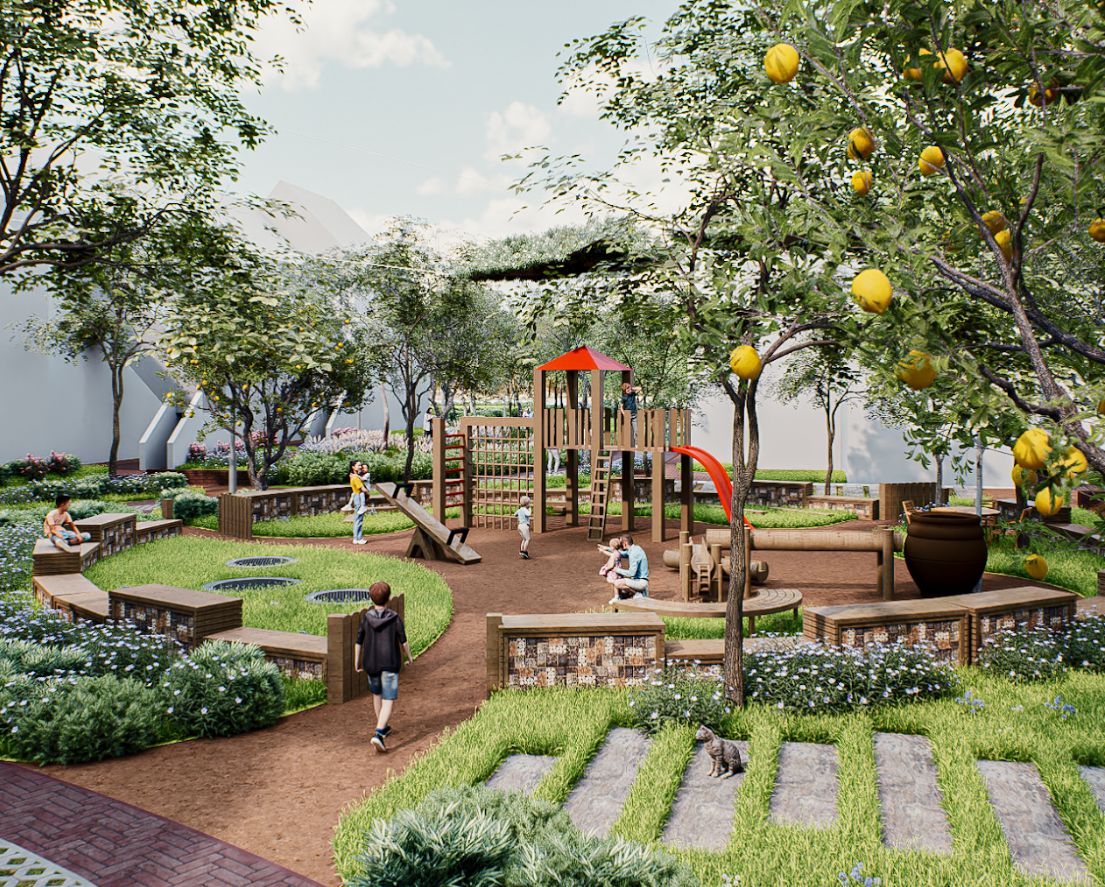
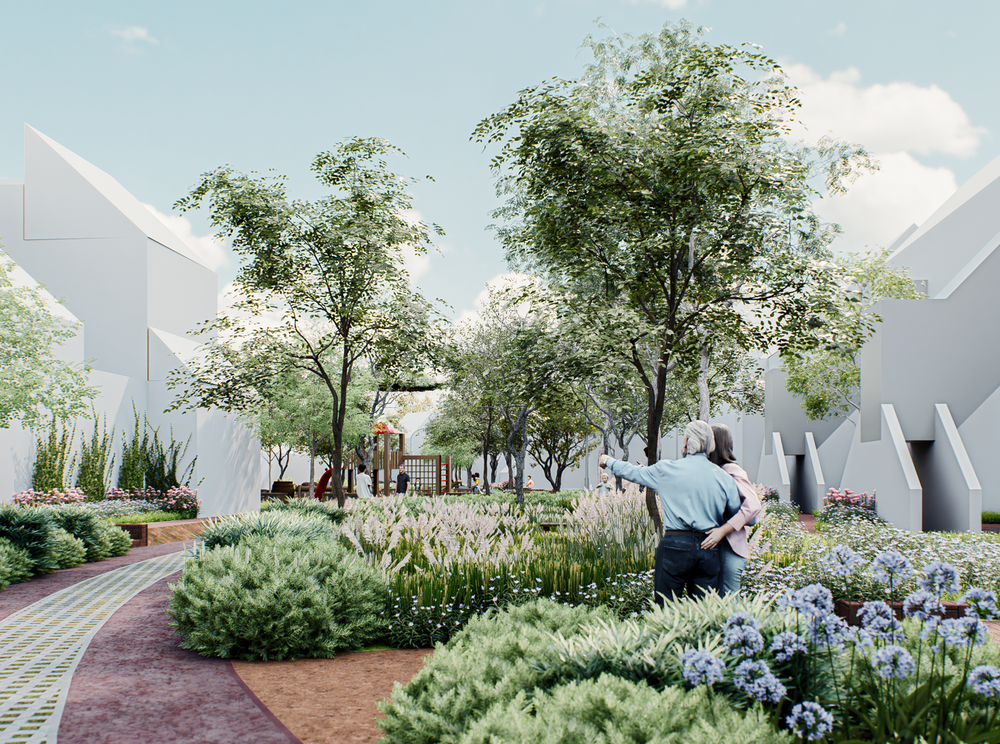
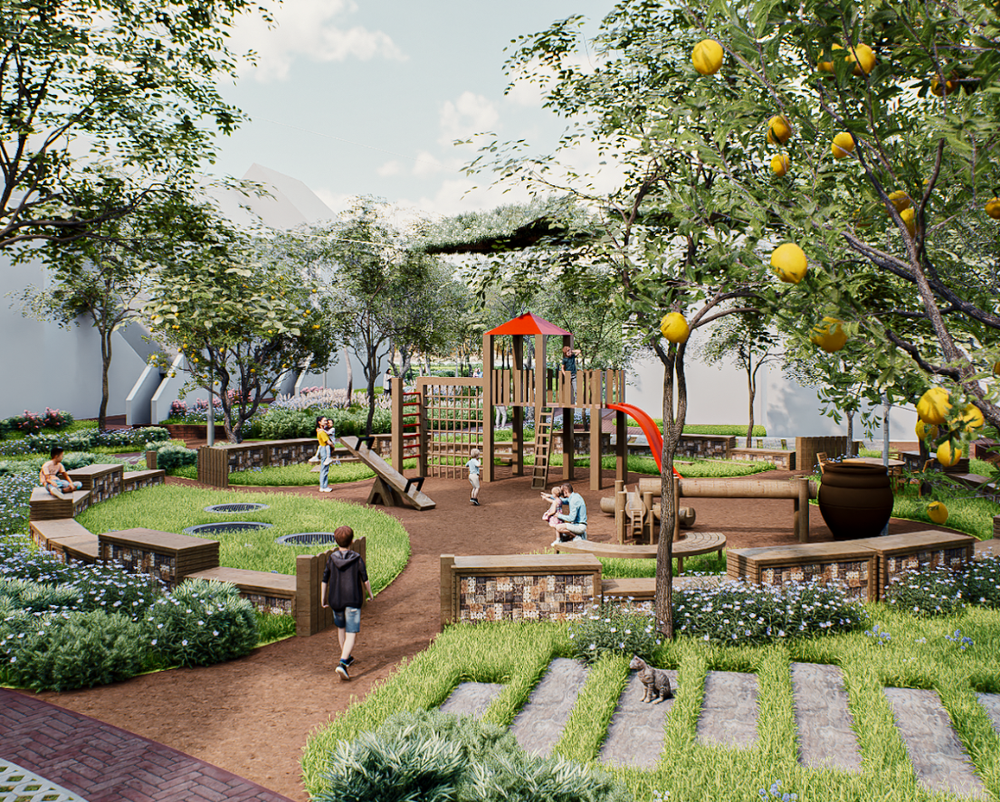
Green second. On top of the shade layer, we built a layered planting system: groundcover, shrubs, understory, canopy. Community orchards and herb beds went into shared courtyards, with fruit trees chosen for harvest calendars residents could actually use. Flowering lawns replaced ornamental grass, pulling in pollinators and cutting maintenance at the same time.
Water third. We lifted 33% of the neighborhood’s paving and replaced it with permeable surfaces, rain gardens, and wadis that hold and slow stormwater before it reaches the sewer. Underground water-storage crates sit beneath the new parking bays, buying capacity for the heaviest downpours without taking space from residents above ground.
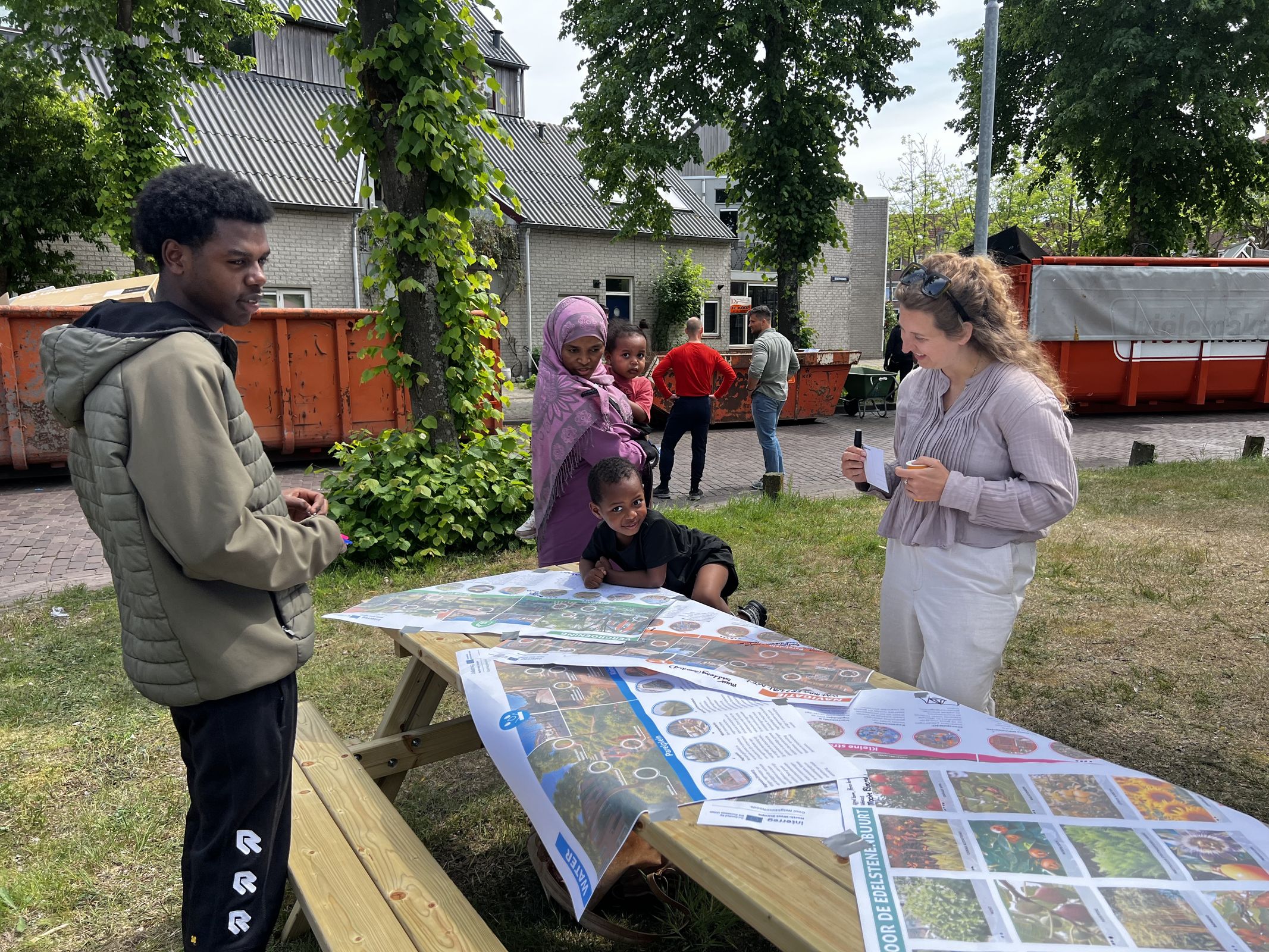
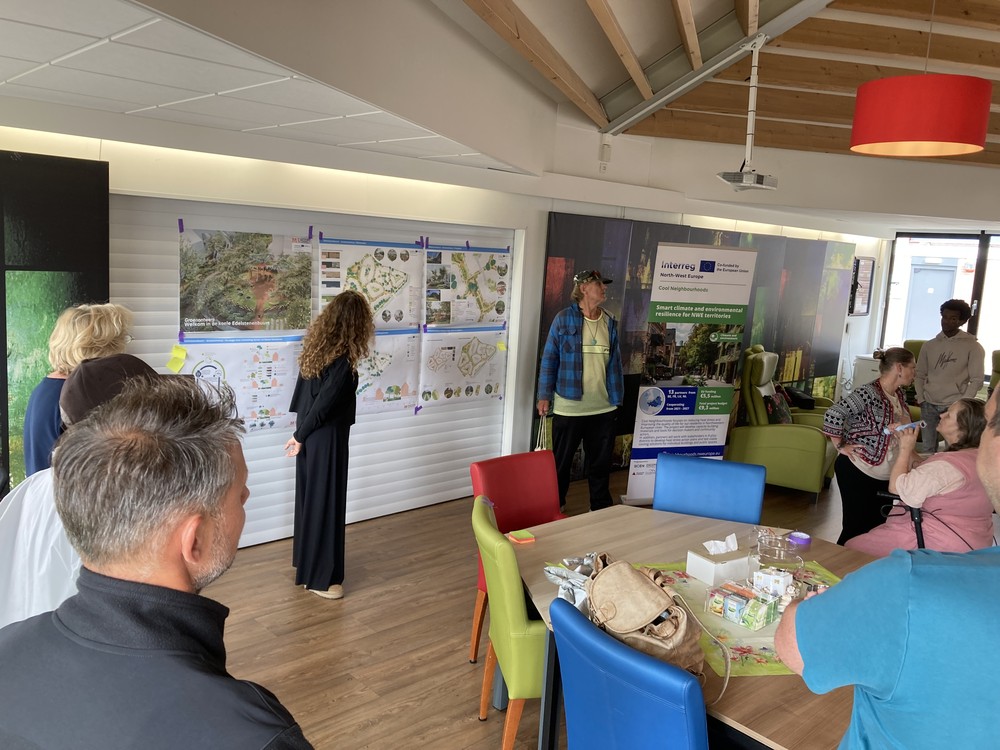
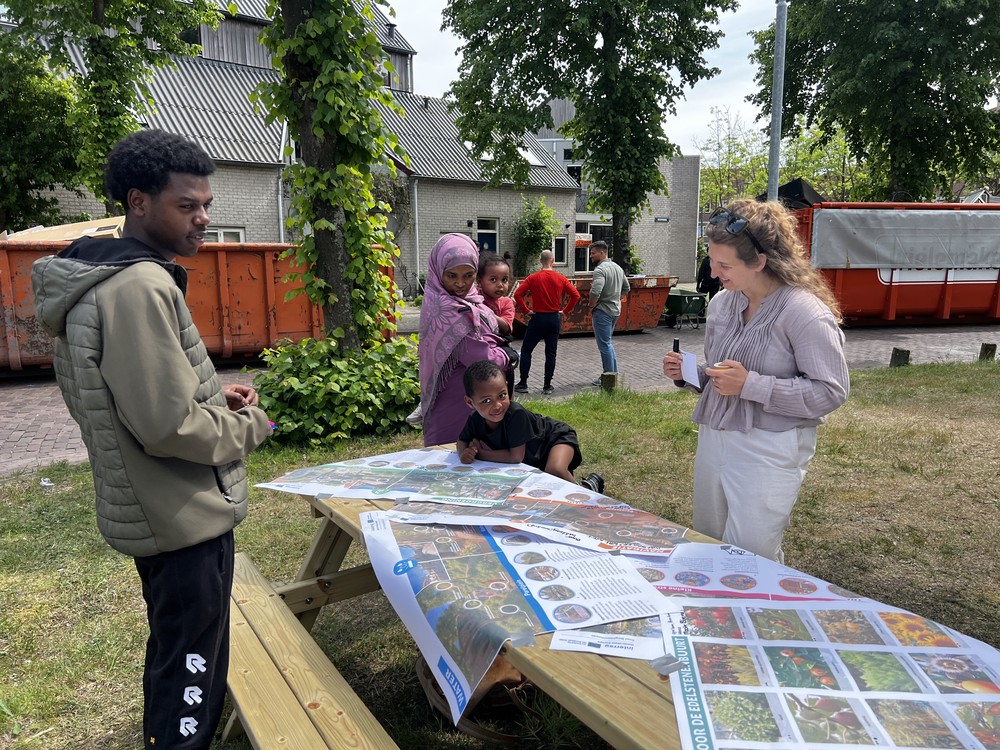
The design was built with the people who would live in it. Over the course of the project, we ran co-creation sessions with residents, Woongoed, Vizita, and the Municipality of Middelburg, walking the neighborhood together, testing layouts on the ground, and adjusting plans between rounds. Residents chose the fruit tree varieties, named the courtyards, and helped decide which parking bays to keep and which to green.
To keep costs down and embodied carbon low, 6,208 m² of the original paving (22% of the total) was lifted, cleaned, and reincorporated into the new design.
Three types of green space
Public green covers 10,273 m² of the neighborhood, the largest of the three categories. It includes avenue trees along the main streets, bioswales that double as rainwater infrastructure, and flowering lawns that replaced mown ornamental grass. This is the green that everyone passes through on the way home.
Community green adds another 986 m² in shared courtyards and pocket gardens. Orchards, herb beds, and fruit trees sit in spaces residents maintain and harvest together, giving each block a small piece of productive landscape that belongs to no one household and everyone at once.
Private green fills the remaining 1,027 m² in front gardens. Residents received planting kits and species guidance so each house could contribute a small strip to the wider system, tying the public and community layers back to the front door.
Key outcomes
Green surface rose by 6,210 m², bringing the neighborhood’s total to 12,286 m², or 44% of its area. Permeable surface went from 1.8% to 33%, enough to absorb the rainfall events that used to flood the street. Eighty-four new trees joined the neighborhood, 34 of them fruit-bearing, lifting the total tree count to 376. Summer surface temperatures in the redesigned zones dropped by 3°C.
Forty-seven parking bays were replaced by green space and 293 remaining spaces were resurfaced with permeable paving, shifting the balance of the street without removing capacity residents still needed. And 6,208 m² of the old paving found a second life in the new design, cleaned, re-laid, and working again.
Wider impact
The redesigned neighborhood captures 50% more CO₂ per year than it did before, absorbs roughly 207 kg of fine dust from the air annually, and has lowered ambient noise by 3 dB along the main streets. The 34 fruit trees are expected to produce around 500 kg of fruit a year once established, harvested by residents through the community orchards. Vizita’s care residents now have shaded benches and green sightlines from their windows, and children have somewhere to play that is not the parking lot.
Social outcomes tracked the physical ones. Residents report stronger ties to their neighbors and a clearer sense of ownership over the shared spaces, both of which tend to outlast the plants themselves. Edelstenenbuurt is one of nine pilot neighborhoods in the Interreg North West Europe Cool Neighbourhoods program, contributing its data and methods to the other eight.
Our role
We led the integrated design, landscape and mobility strategy, stakeholder facilitation, climate-risk assessments, ecosystem valuation, phased implementation roadmap, and tender support. This project was made possible through collaboration with Woongoed Middelburg, care provider Vizita, the Municipality of Middelburg, and the Interreg North West Europe Cool Neighbourhoods program. If your neighborhood is facing the same heat and water questions, we would be glad to walk you through what worked here, and what we would do differently next time.
April 8, 2026

Architect and Project Manager
Director
Head of Urban Planning
Urban Planner/ Systemic Sustainability Strategist
Landscape Architect
International Architectural Assistant